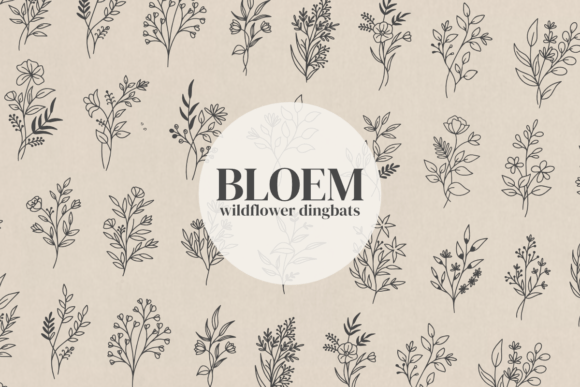
Integrating Bloem: A Practical Guide to Using a Botanical Dingbats Font
Understanding the Asset: Beyond Standard Typography
In the realm of graphic design and professional content creation, typography is rarely limited to the arrangement of alphabets and numbers. A comprehensive design toolkit often includes specialized assets that bridge the gap between text and imagery. Bloem and Bloem represents this intersection, functioning as a unique botanical wildflower dingbats font. Unlike a traditional serif or sans-serif typeface used for body copy, this font is engineered to render vector-based floral illustrations directly from keystrokes.
For the professional or creative entrepreneur, understanding the nature of a dingbats font is the first step in workflow integration. When you install Bloem, you are not merely adding a text style; you are importing a library of scalable vector graphics accessible via your keyboard. This distinction is vital for process planning. It allows creators to bypass the time-consuming search for stock imagery or the complex manipulation of vector paths in advanced software. Instead, floral elements become as easy to type as a sentence, streamlining the transition from concept to execution.
Workflow Integration: Where Bloem Fits in the Process
The true value of a design asset is measured by its utility within a production timeline. Bloem is versatile enough to be utilized at various stages of a project, from initial brainstorming to final polish, depending on the specific requirements of the deliverable.
The Ideation and Mockup Phase
During the early stages of a project—such as drafting a mood board for a wedding invitation or planning the layout of a seasonal social media campaign—speed is often prioritized over perfection. Designers and freelancers can use Bloem to quickly populate mockups with high-quality botanical motifs. Because the font is scalable, it retains its clarity whether used as a small accent on a business card or a bold header on a poster. This allows for rapid prototyping without the overhead of managing external image files.
The Production and Execution Phase
For projects with tight turnarounds, such as daily blogging graphics or client revisions, Bloem serves as an efficiency tool. Small business owners and marketers can utilize the font to add a professional "hand-made" aesthetic to their materials without requiring advanced illustration skills. It fits seamlessly into the production workflow of creating digital assets, allowing for the immediate decoration of headers, pull quotes, or page dividers.
The Final Polish and Quality Control
In the final stages of a project, consistency is key. If a brand requires a specific floral theme—such as a wildflower aesthetic for a summer collection—Bloem ensures that the visual language remains uniform across all touchpoints. By using the same font file across different platforms, you guarantee that the botanical elements match perfectly in style and weight, aiding in brand recognition and professional presentation.
Practical Implementation Across Platforms
Integrating a font like Bloem into your workflow requires understanding how it interacts with different software environments and output requirements. The implementation strategy changes based on whether the end product is digital or physical.
Digital Integration: Social Media and Web
For content creators and social media managers, visual engagement is a primary metric. Bloem can be installed directly onto a local machine and accessed through standard design software like Adobe Photoshop, Illustrator, or Canva (desktop version). When designing Instagram stories, Pinterest pins, or website banners, the font allows for the creation of decorative borders and standalone icons.
A practical workflow tip for digital use involves pairing Bloem with clean, sans-serif fonts. For example, a marketing professional might use a bold sans-serif for the call-to-action and use a character from Bloem as a decorative bullet point or separator. This creates a visual hierarchy that draws the eye without cluttering the message. Because the elements are rendered as text, they load quickly on websites compared to heavy image files, contributing to better site performance.
Physical Production: Print and Merchandise
When transitioning from screen to paper, vector integrity is paramount. Because Bloem is a font, its elements are mathematically defined curves rather than pixels. This makes it ideal for high-resolution printing processes used in business cards, book covers, and invitations. Publishers and stationery designers can rest assured that the wildflower designs will not pixelate, regardless of the print size.
For merchandise such as mugs or tote bags, the font interacts well with heat transfer and sublimation printing workflows. The clean paths inherent in a well-designed dingbats font ensure that cutting machines (like those used for DIY vinyl decals) can easily trace the outlines. This reduces the need for manual node editing, saving significant time in the production of physical goods.
Preparation and Organization
To maximize efficiency, it is advisable to create a reference sheet or "cheat sheet" for the Bloem font. Since dingbats map to keyboard characters, it can be difficult to remember which key produces which flower. Professionals often create a PDF guide or a pinned design file that displays the character map. This preparation step eliminates the trial-and-error phase during active creation, keeping the workflow uninterrupted.
Compatibility and Technical Considerations
Before purchasing or downloading, users should verify the font format compatibility (such as .OTF or .TTF) with their operating system. Most modern workflows support these standard formats. However, it is important to note that some online platforms (like the web-based version of Canva) may have limitations with uploading custom fonts depending on the user's subscription tier. In such cases, the workflow shifts to creating the design in a local desktop application and uploading it as a flattened image or a transparent PNG to the online platform.
Long-Term Use and Versatility
A botanical dingbats font is not a one-time-use asset. Its value increases over time as it is applied to different contexts. A font like Bloem can be used for a wedding suite in the spring, a summer sale banner, and autumn-themed educational worksheets. By mastering the font's library, users build a versatile asset that adapts to seasonal trends and shifting project goals, providing a high return on the initial investment.
Enhancing Creative Output
The introduction of Bloem into a creative toolkit changes the approach to decoration and ornamentation. It shifts the focus from "finding an image" to "composing a layout." This subtle change in mindset encourages a more fluid and integrated design process.
For educators and bloggers, the font offers a way to make information more digestible. Using floral dingbats as list markers or section breaks can soften the visual impact of dense text, making content more inviting to read. For entrepreneurs, it provides a way to brand materials with a distinct aesthetic—such as a rustic, botanical, or organic feel—without the recurring cost of purchasing stock illustrations for every new post or flyer.
Ultimately, Bloem and Bloem